
Soft Power Through Stories
When we talk about Korea’s global influence, it is often reduced to visible outputs — K-pop, K-dramas, beauty, and fashion. But that view misses the real mechanism at work.
Korea’s soft power does not operate by selling better products. It operates by exporting stories that structure everyday life, where products are simply entry points into those stories.
This is why people don’t just consume Korean culture — they participate in it.

Narrative systems as the foundation of Korean soft power
Korea's soft power is built not on isolated successes, but on interwoven narrative systems that span media, lifestyle, and brands.
Idols are organised into extended arcs, eras, and continuity. K-dramas prioritise emotional progression over spectacle. Webtoons operate as expandable universes. Brands behave like characters with distinct personalities and evolving identities.
In this ecosystem, stories come first. Products follow as extensions of meaning, not as the source of value. The exportable unit of Korean culture is the narrative itself.
K-media as lifestyle transmission, not entertainment
The rapid global rise of K-dramas shows how Korean media functions less as entertainment and more as lifestyle documentation.
Squid Game did not explain Korean society — it showed it. Debt, hierarchy, childhood games, and collective pressure were embedded naturally into the story.
When Life Gives You Tangerines offers a quieter but equally powerful lens, spanning generations and seasons to reflect both historical memory and present-day realities of Korean life.
These stories do more than tell plots. They allow global audiences to understand how life is lived in Korea, without formal instruction. This is soft power at its strongest.

Shared stories make influence scalable.
A defining feature of Korean soft power is that stories are collectively experienced.
Students grow up watching the same formats. Idol trainees are followed publicly for years. Webtoons shape shared humour, slang, and visual language. National rituals such as Chuseok, Seollal, and kimjang reinforce emotional synchrony.
This creates shared cultural memory. When Korean culture travels globally, it arrives as a coherent system rather than fragmented references, allowing it to scale with unusually high consistency and recall.
The K-pop training system and the meaning of support
K-pop’s trainee system is often discussed as an industry model, but its deeper value lies in how it reframes consumption.
By making effort, preparation, and struggle visible, the system positions cultural labour as something to be supported. Purchasing an album does not feel like a financial investment; rather, it feels like you are supporting a friend's journey.
This transforms viewers into long-term stakeholders rather than passive customers, creating a unique and significant soft-power dynamic.
Everyday life as exportable culture
What makes Korean soft power distinctive is its focus on ordinary life.
Korean media repeatedly highlight midnight convenience-store meals, school and study routines, real cafés and neighbourhood hangouts, daily food habits, and work rhythms.
Over time, international audiences develop a form of habit literacy. They understand how Koreans eat, study, greet elders, respect hierarchy, and move through daily life — often without ever visiting the country.
Korean culture feels familiar and livable, not distant or aspirational.
Real places as cultural anchors
Korean storytelling constantly situates emotion in actual, accessible contexts.
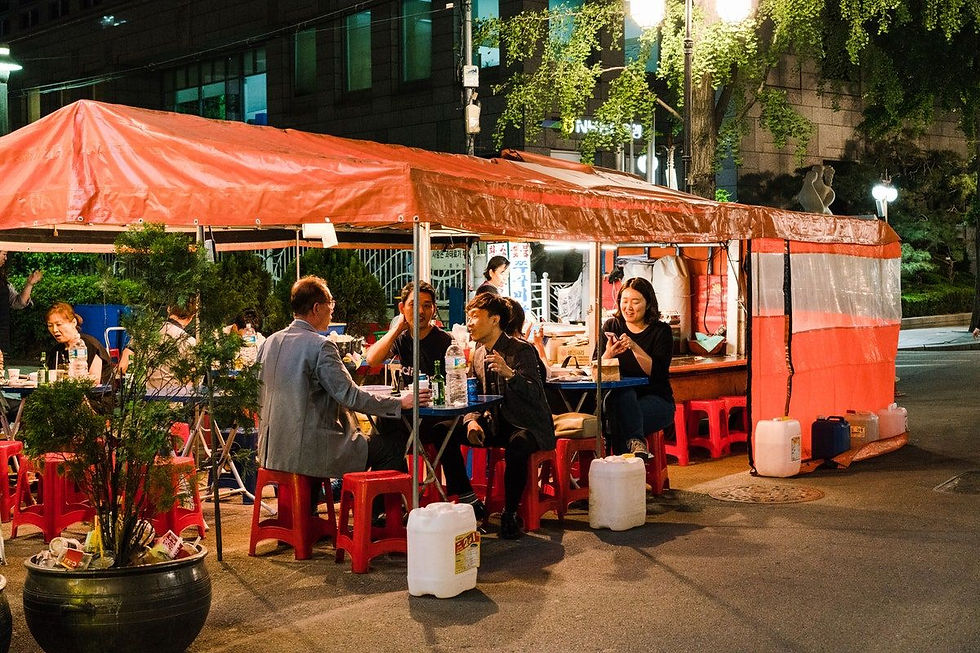
Cafés and restaurants, bus stations and rooftops, bakeries, noraebangs, and pojangmacha tents serve as emotional reference points rather than just backdrops.
When the show airs, these places gain visibility and meaning. Soft power becomes spatial. Audiences do not just watch Korea; they know where it exists.
Behavioural adoption as proof of soft power
One of the strongest indicators of mature soft power is behavioural transmission.
Korean media embeds cultural details so naturally that global audiences begin adopting them — bowing to elders and seniors, understanding hierarchical dynamics, and recognising superstitions such as avoiding the number 404.
When habits cross borders without explanation, influence has moved from visibility to internalisation.
Folklore as cultural depth
Korean media incorporates mythology into current storytelling.
The creatures like nine-tailed fox, goblins, mountain spirits, grim reapers, agwi, imoogi, and bulgasari are portrayed in contemporary emotional situations rather than as distant mythology.
This invites global audiences into Korean belief systems and cosmology, extending soft power beyond modern pop culture into cultural history.
Food media and sensory soft power
Mukbangs and Korean food content operate as sensory soft power.
Audiences around the world recognise ramen brands, understand preparation styles, and associate foods with comfort, stress relief, or routine — often without ever tasting them.
Cultural demand is created before physical access. Familiarity precedes distribution.
Interruption and return as narrative reinforcement
Mandatory military service introduces an interruption into Korean cultural careers.
Absence becomes part of the story. Return becomes a shared moment. Waiting itself turns into participation, reinforcing long-term emotional alignment with Korean cultural systems.
When cultural gravity reverses
Korea’s soft power has reached a stage where influence flows both outward and inward.
Western artists increasingly perform in Korea. Jay-Z’s investment in Korean assets signals institutional confidence rather than trend-chasing. HYBE’s expansion into India, the US, Japan, and Latin America reflects accumulated cultural familiarity, supported by statements from companies like G-Dragon’s and JYP.
Here, culture leads and business follows. Soft power reduces risk.

The larger insight
Korea’s influence does not come from elevating products.
It comes from structuring everyday life, labour, space, memory, and belief into coherent narratives — and allowing people to enter those narratives through consumption.
That is why people buy stories, not products.
And that is why Korea’s soft power feels both intimate and global at the same time.


The way you dive deep into every subject is amazing. That's my favorite thing about your content, all your vlogs are informative and truly interesting.